Most Texas homes need about 1 ton of AC for every 500 to 600 square feet. That puts a 1,500 sq ft home near 3 tons and a 2,500 sq ft home near 4 to 5 tons. But square footage is only a starting point. The right answer for what size AC you need comes from a Manual J load calculation, which looks at your insulation, windows, sun exposure, and ductwork.
We are Green Leaf Air, a family-run HVAC contractor in Richardson. We size and install systems across Dallas, Fort Worth, Houston, North Carolina and the suburbs every week. This guide shows you how to get a solid estimate in five minutes, and how to spot a contractor who is guessing.

What Does AC Tonnage Mean?
AC tonnage measures how much heat a system can remove from your home in one hour. One ton equals 12,000 BTUs per hour. It has nothing to do with weight. A 3 ton unit removes 36,000 BTUs of heat per hour, and a 5 ton unit removes 60,000. Most homes use systems between 1.5 and 5 tons.
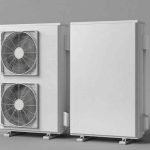
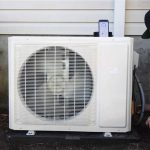
Quick tip: you can find your current size on the outdoor unit’s data plate. Look for a model number with 18, 24, 30, 36, 42, 48 or 60 in it. Divide that number by 12 to get tons. A model with “36” is a 3 ton unit.
AC Size Chart for Texas Homes (Square Feet per Ton)
Many contractors use a rule of 400 to 600 square feet per ton (Energy Vanguard). In North and Central Texas, a typical existing home lands in the 500 to 600 range. The chart below uses that math as a ballpark only.
| AC Size | Cooling Output | Typical Texas Home Size (ballpark) | Common Fit |
| 2 ton | 24,000 BTU/hr | 1,000 to 1,200 sq ft | Small homes, condos, additions |
| 2.5 ton | 30,000 BTU/hr | 1,250 to 1,500 sq ft | Starter homes, townhomes |
| 3 ton | 36,000 BTU/hr | 1,500 to 1,800 sq ft | Average single-story homes |
| 3.5 ton | 42,000 BTU/hr | 1,750 to 2,100 sq ft | Larger single-story homes |
| 4 ton | 48,000 BTU/hr | 2,000 to 2,400 sq ft | Family homes, open floor plans |
| 5 ton | 60,000 BTU/hr | 2,500 to 3,000 sq ft | Large homes, or one zone of a two-system home |
Two things this chart can’t tell you. First, newer, well-sealed homes often need far less. Some have loads of 800 square feet per ton or more, even in hot climates (Energy Vanguard). Second, 5 tons is the largest standard size for most residential central AC. Homes above roughly 3,000 sq ft usually get two systems, often one per floor.
Want a faster number for your home? Try our free AC size estimator. It factors in your ZIP code, insulation, sun exposure, windows, and household size.
How Many Tons of AC for a 2,000 Sq Ft House in Texas?
A 2,000 sq ft Texas home usually needs a 3.5 to 4 ton AC. A newer home with good insulation and low-E windows may only need 3 tons. An older home with west-facing glass, a hot attic, or leaky ducts may push toward 4 tons. Only a Manual J load calculation tells you which side of that range your home is on.
2 Ton vs 3 Ton vs 4 Ton vs 5 Ton: Quick Picks
- 2 ton: under about 1,200 sq ft, or a garage apartment or room addition.
- 3 ton: the most common size for a 1,500 to 1,800 sq ft single-story home.
- 4 ton: a good match for many 2,000 to 2,400 sq ft homes in DFW and Houston.
- 5 ton: large homes with high ceilings, lots of glass, or heavy afternoon sun. Above this, plan on two systems.
How to Estimate Your AC Size in 3 Steps
- Find your cooled square footage. Use only conditioned space. Skip the garage and unfinished attic.
- Divide by 500 to 600. A 1,800 sq ft home gives 3 to 3.6 tons.
- Adjust for your house. Lean up for big west or south windows, vaulted ceilings, poor insulation, or a two-story home with one system. Lean down for new construction, spray foam, or shaded lots.
For a BTU-based estimate, you can also use our heating and cooling BTU calculator.
Not sure your numbers add up? Send us a few photos of your current unit and home through Quote by Photos and we’ll give you a sizing estimate. No visit needed to get started.
Why Square Footage Alone Isn’t Enough in Texas
Two 2,000 sq ft homes on the same street can need different AC sizes. Here is what changes the load in a Texas home:
- Sun and window direction. West-facing glass takes the full force of a 5 p.m. July sun.
- Attic heat. Texas attics get extremely hot in summer. Thin insulation and ducts in the attic add a lot of heat.
- Humidity. Houston and the Gulf Coast need a system that removes moisture, not just heat. DFW sees muggy spells too.
- Duct leaks. Leaky ducts dump cold air into the attic, so the system works harder for the same comfort.
- Ceiling height and layout. Vaulted ceilings and open plans hold more air to cool.
- Number of people. Every person and appliance adds heat.

What Is a Manual J Load Calculation?
A Manual J load calculation is the industry method for finding exactly how much heating and cooling a home needs. It was developed by the Air Conditioning Contractors of America (ACCA). It uses your home’s square footage, insulation, windows, orientation, air leakage, and local weather data to find the true cooling load in BTUs. The result tells you the right AC size.
The International Residential Code requires equipment to be sized using Manual J loads and selected with ACCA Manual S, or another approved method (IRC M1401.3 summary). Local amendments vary, and some cities ask for a Manual J summary with permits. Energy Vanguard calls Manual J “the correct way to size an air conditioning system.”
Here is a red flag to watch for. If a contractor quotes you without measuring anything and just matches your old unit’s size, ask why. Your old system may have been the wrong size from day one. Matching the old nameplate does not meet the sizing requirement (Jaspector).
What Happens If Your AC Is Too Big?
An oversized AC cools the air fast, then shuts off before it pulls out enough moisture. This is called short cycling. The house feels cold but clammy, and the frequent starts wear out parts sooner. Oversized systems also cost more up front, and every extra ton is money spent on capacity you don’t use.

Energy Vanguard lists “a clammy house” and a “shorter lifetime for the system” as the main results of oversizing. The ENERGY STAR new homes program limits cooling oversizing to no more than 15%. In a humid Texas summer, that clammy feeling is the first sign we look for. If your home has that problem now, read our guide on controlling indoor humidity with your HVAC system.
What Happens If Your AC Is Too Small?
An undersized AC runs nonstop on hot afternoons and still can’t hit the thermostat setting. Upstairs rooms stay warm, bills climb, and the compressor rarely gets a break. In a week of 100°F days, an undersized system often falls several degrees behind by evening.
Bigger is not safer, and smaller is not cheaper in the long run. The goal is a system sized to your home’s real load.
Does SEER2 Rating Change What Size AC I Need?
No. SEER2 measures efficiency, not capacity. A 3 ton, 14.3 SEER2 unit and a 3 ton, 17 SEER2 unit remove the same amount of heat. The higher rating just uses less electricity to do it. Since January 1, 2023, new split AC systems in the Southeast region, which includes Texas, must meet at least 14.3 SEER2 under 45,000 BTU/hr and 13.8 SEER2 at 45,000 BTU/hr and above (SEER overview).
Where efficiency does tie into size: two-stage and variable-speed systems can run at lower output most of the day. That gives longer, quieter cycles and better moisture removal. For a Texas home, that is often worth more than a jump in tonnage. Compare options in our 14 SEER vs 16 SEER guide.
How Green Leaf Air Sizes Your New AC
When you book an AC replacement or new install with us, here is what happens:
- We measure your home. Rooms, windows, ceiling heights, and which way the house faces.
- We check the attic and ducts. Insulation depth, duct size, and leaks.
- We run a load calculation. We size to your home, not your old unit.
- We give you options in writing. Usually a good, better, and best choice from Trane and Goodman.
- We install and test. Airflow and refrigerant charge are checked before we leave.
Every quote is a written estimate, and we match or beat written estimates from other contractors. Qualifying systems come with a free 10-year parts warranty, and financing is available. We are fully insured and licensed in Texas (TACLA00022635C).
We serve homes across the Dallas-Fort Worth area, including AC installation in Dallas, Richardson, Plano, Frisco, Garland and Fort Worth, plus AC installation in Houston and Sugar Land.
Get the Right Size AC the First Time
So, what size AC do I need? For most Texas homes, start with 1 ton per 500 to 600 square feet, then let a real load calculation make the final call. Getting it right means lower bills, drier air, and a system that lasts.
Call Green Leaf Air at (972) 992-5006 or request your free in-home sizing quote. We’ll measure your home, explain your options in plain English, and put it all in writing. Open Monday to Saturday, 7 AM to 7 PM.
Frequently Asked Questions
How many square feet does a 3 ton AC cool in Texas?
A 3 ton AC typically cools about 1,500 to 1,800 square feet in Texas, based on the common 500 to 600 sq ft per ton rule. A newer, tight home may get more coverage. An older home with poor insulation may get less.
Is a 4 ton AC enough for 2,500 sq ft?
Sometimes. A well-insulated 2,500 sq ft home with good windows can do fine on 4 tons. Homes with lots of west-facing glass, high ceilings, or attic ducts often need 5 tons, or two smaller systems. A load calculation settles it.
Is it better to oversize an AC in Texas?
No. An oversized AC short cycles, which leaves your home cool but humid and wears out parts faster. In humid parts of Texas, a correctly sized or variable-speed system usually feels more comfortable than a bigger one.
Should I replace my AC with the same size?
Not automatically. If you’ve added insulation, new windows, or a room since the last install, your load has changed. Many older systems were also oversized from the start. Ask for a load calculation before you buy.
What is the biggest residential AC unit?
Most residential central AC systems top out at 5 tons (60,000 BTU/hr). Larger homes typically use two systems, often one upstairs and one downstairs, for better comfort and zoning.
How much does a new AC cost in Texas?
Price depends on size, efficiency, and install needs. As examples from our current listings, a Goodman 2 ton 15.2 SEER2 AC system starts around $6,007, and a Trane 5 ton 14.3 SEER2 system is listed at $8,399. Call for an exact installed quote for your home.
How long does an AC sizing visit take?
Most in-home sizing visits take about an hour. We measure rooms and windows, check the attic and ducts, and then walk you through options.