People come to spas and salons to look and feel good. But when the indoor air quality of your spa or salon is poor, your clients won’t feel as comfortable. They will lose the urge to come to your spa, which will eventually affect your salon business.
In spas and salons, the use of nail polish, aerosols, hair dyes, and other chemicals is common. Usually, employees of your spa are already accustomed to it. But don’t expect the same from your clients. Because of this pandemic, people are more sensitive about their health. Besides, some customers are allergic to these spa chemicals. As a spa or salon owner, you definitely don’t want to put your clients at risk, right?
So, what can you do to keep your clients safe and make them keep coming to your salon? Fortunately, there are some HVAC solutions to tackle these air quality and odor issues.
| TL;DR Protect your salon’s reputation and health by mastering HVAC solutions like source capture and VOC filtration to ensure a safe, odor-free breathing zone. |
Why Salon Air is Unique
A pleasant aroma is part of the experience. However, the distinct “salon smell” comes from a high concentration of Volatile Organic Compounds (VOCs). Unlike a typical office, salons also have to deal with particulate matter (like nail dust and hair clippings). Gaseous pollutants from adhesives, lacquers, and dyes are also irritating.
In technical terms, we monitor the Total Volatile Organic Compounds (TVOC). If you have poor ventilation, TVOC levels can skyrocket. Your salon or spa becomes vulnerable to occupational risks like throat irritation, headaches, and long-term respiratory issues.
3 Signs Your Salon or Spa Requires an HVAC Checkup

1. Odor
In spas and salons, employees have to use chemicals to give their customers a certain look. But after using these chemicals, if you notice that the chemical odor is still circulating inside the salon, you need a ventilation upgrade right now.
Odor drifting from one room to another is another sign you need a ventilation upgrade. When there isn’t enough airflow, the indoor air becomes stagnant. The stagnant air can’t push the VOCs (which cause odors) away.
2. Fog in the Window
Noticing water vapor on the windows of your salon or spa? It’s because your salon has a humidity issue from poor latent heat removal. The quicker you take action, the more comfort you can offer to your customers. Otherwise, excess humidity can cause your spa or salon to be a breeding ground for various microorganisms.
3. Dust is Everywhere
When the HVAC air ducts of your spa or salon are filled with dust and other particles, you’ll notice dust on your furniture and salon chairs as well. It usually happens if you skip air duct cleaning for years. Contact your nearby air duct cleaning professional and have your HVAC air ducts checked as soon as you identify this issue.
5 Tips to Fight Indoor Air Quality Issues in Spas & Salons

1. Add an Air Purifier
You’ll notice a drastic change to your indoor air quality with just an air purifier. There are different types available on the market. I recommend you buy an air purifier that is specifically designed for spas and salons. You can find specialized HVAC accessories and purifiers that integrate directly into your air handler to treat the air at the source.
These air purifiers come with HEPA air filters, which effectively eliminate dust and gaseous VOCs. Again, if you’re concerned about COVID-19, you can go for an air purifier that has bipolar & ionization technologies. This type of air purifier not only filters the air but also sends charged particles that destroy the droplets.
In any case, avoid buying a home air purifier. Home air purifiers have different designs and can’t eliminate some particles found in spas and salons. Fortunately, there are some HVAC solutions to tackle these air quality and odor issues. Whether you are looking for commercial HVAC services in a high-traffic area or need a quick AC repair for your salon, professional intervention is the first step.
2. Install a Source Capture System
A source capture system is the best way to remove dust and chemicals from a spa. It has the capability to draw around 50 cubic feet/minute of airflow (if you place it at least 6 inches away from the dust source). As a result, your employees and clients can have a cleaner breathing space free from dust and harmful chemicals.
For installing a source capture system in your spa or salon, contact your local HVAC professionals and install it professionally.
3. Increase Makeup Air & Strategic Ventilation
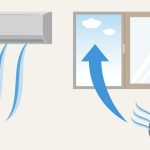
Diluting indoor air with fresh outdoor air is the way to lower the TVOC concentration. We call this providing makeup air. Increasing the makeup air is one of the best ways to improve air quality in spas and salons beyond basic ventilation.
You also need to maintain a slight pressure gradient. Then your HVAC system can make sure that chemical odors from a hair-dyeing station don’t drift into message rooms or the reception area.
4. Control Your Spa’s Humidity
Managing moisture is the first step in odor control, similar to how we approach tackling locker room smells in other commercial wellness facilities.
Generally, when you have an oversized cooling unit, your AC will cycle frequently and cannot effectively remove moisture from the air. As a result, the moisture level shoots up and causes various problems.
When the humidity level in your spa is high, your clients will feel sweaty and uncomfortable. Besides, as I mentioned earlier, high-humidity areas are the breeding ground for various microorganisms. To keep the humidity level of your spa in check, you can install a dehumidifier in your spa or salon.
5. Sign Up for Preventative Maintenance
In a salon, hairspray and fine dust are abundant. They end up on your HVAC coils and clog filters faster than in a home. Regular preventative maintenance from a reliable HVAC service provider makes sure your HVAC system stays clear of such issues to protect your environment, equipment, and your energy bills.
OSHA and Industry Standards for Compliance
As a salon owner, employee and customer safety is your responsibility. OSHA sets a short-term exposure limit (STEL) for formaldehyde (one of the VOCs) at 2ppm over a 15-minute period. Many professional hair-smoothing treatments exceed that if you don’t have proper ventilation.
To meet EPA standards, follow the guidelines set by the Professional Beauty Association (PBA):
- Have a source capture system capable of exhausting at least 50 cubic feet per minute.
- Limit Formaldehyde release from hair smoothing treatment to 2ppm over 15 minutes.
- Maintain a ventilation rate of 20 to 25 CFM per person.
- Protect the two-foot breathing zone sphere around the stylist and client’s head.
- Use 3-free or 5-free products (free from Toluene, Formaldehyde, and Dibutyl Phthalate).
Frequently Asked Questions About Air Quality Issues in Spas & Salons
Can’t I just open the front door or use a window fan for ventilation?
You can, but it won’t be as effective. Opening a door gives you some fresh air from outside. However, it doesn’t always remove the chemicals you want reliably. To meet IMC and OSHA standards, you need a dedicated system.
How often should I change my HVAC filters in a salon environment?
We recommend checking your filters at least every 30 to 60 days. Hairspray resins and fine nail dust clog salon filters faster than homes. That’s why you need a more frequent change to prevent system strain and maintain high air quality.
Does a standard HEPA filter remove the chemical smell?
No. HEPA filters keep fine particulate matter out. To eliminate chemical odors and VOCs, you need a filter with activated Carbon.
What exactly is “makeup air,” and why do I need it?
The “makeup air” is the fresh air your HVAC system pulls in from outside. It replaces your “old” air inside. Without it, your building can develop “negative pressure”. You’ll find your door hard to open and your AC working less efficiently.
Are “3-free” products really that much better for air quality?
Yes. Products labeled 3-free are formulated without Toluene, Formaldehyde, and Dibutyl Phthalate. These products reduce the “chemical load” on your ventilation system. You’ll also maintain safe TVOC levels easier.
Conclusion
Creating a pleasant experience for your clients is an essential part of running a successful spa or salon. When your air is clean, your clients feel pampered, and your staff stays healthy and productive. That’s why you need to address VOCs and manage your makeup air. Follow OSHA regulations too to invest in the longevity of your business. Don’t let poor indoor air quality be the invisible reason your clients don’t come back.