Does your gas furnace continuously shut down after each startup and stop responding within a few minutes? If you answered yes, your gas furnace is likely in ignition lockout and will require a proper reset or additional repair work.
It can happen from simple things like a dirty flame sensor, clogged filter, or minor gas supply fluctuations to bigger issues like gas leaks or faulty heat exchangers. Ignoring this problem can lead to major potential risks, including carbon monoxide poisoning and detonation.
In this article, I’m going to share details about ignition lockout to help you understand, diagnose, and fix the issue.
| TL;DR When you are facing a furnace ignition lockout, reset the furnace, clean the flame sensor, check the igniter/pilot light and the gas supply, and make sure your furnace is getting proper airflow. |
Quick Reset Steps to Try in Furnace Lockout
Before diving into deeper troubleshooting or calling a technician to repair your furnace, try a soft reset. For minor glitches, this 3-minute process can restore your heat immediately:

- Turn off the power using the switch or the furnace breaker at your main electrical panel.
- Wait 3 to 5 minutes. It’s enough time for the control board to clear out error codes.
- Turn the power back on.
- Test your furnace by setting the thermostat to “heat” and raising the temperature.
If the furnace starts and keeps running, the glitch is cleared. If it shuts down again after a few minutes, the safety sensors are detecting a recurring issue. Scroll down to identify the exact cause.
What is Furnace Ignition Lockout?
Furnace Ignition lockout is a safety feature that shuts down a furnace when it fails to ignite after a few tries.
Modern furnaces have different safety features. Among them, there are several sensors to keep the unit in check to function properly. When one of these sensors detects an anomaly, the furnace controllers force a shutdown. After a few repeated attempts, the furnace goes into lockout.
This is usually good to prevent damage and maintain safety. The furnace ignition lockout helps with:
- Preventing gas buildup
- Avoiding carbon monoxide poisoning
- Protecting furnace components
- Ensuring safe operation
Lockout Due to Retries vs. Recycles
If your control board diagnostic light shows an ignition lockout fault, it usually happens for one of two technical reasons:
- Ignition Lockout Due to Retries: The furnace tried to light a sequential number of times (usually 3 attempts) but failed to establish a flame at all during any of them.
- Ignition Lockout Due to Recycles: The furnace successfully lit, but the flame failed or dropped out shortly after. After losing the flame a set number of times (typically 3 to 5 “recycles”), the system locks out for safety.
Soft Lockout vs. Hard Lockout Timelines
Soft Lockout: This is a temporary safety pause. If your system encounters an ignition failure, it may enter a 1-hour lockout on the furnace. During this time, the system will not try to ignite, but it will automatically reset and try again after 60 minutes have passed.
Hard Lockout: If the furnace experiences severe faults (like a malfunctioning limit switch or repeated ignition proving failure), it triggers a hard system lockout. A hard lockout will NOT reset on its own after an hour. You need to manually reset the power.
Common Causes of Furnace Ignition Lockout
To fix any issues properly, it is important to point out what is causing the problem. The furnace ignition lockout happens when the furnace’s safety mechanisms detect a problem that prevents safe and reliable ignition.
Whether you are dealing with a Carrier, Goodman, or Lennox furnace lockout, the underlying safety mechanisms are almost similar. If you are currently choosing the right furnace for replacement, understanding these brand safety mechanisms can help you make an informed decision.
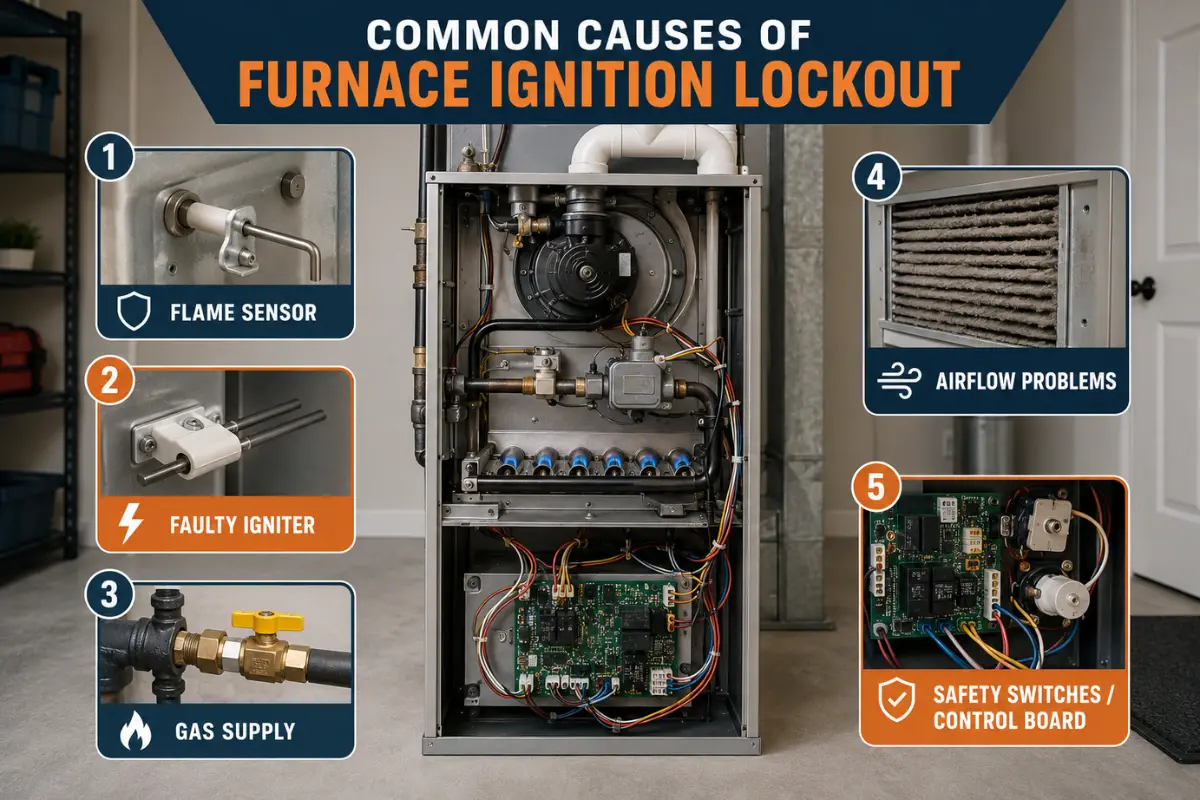
Here are some common causes behind furnace ignition lockout:
1. Flame Sensor Issues
The flame sensor is a metal rod that sits in the burner’s flame and detects the presence of a flame. If there is a flame, the rod creates a current. The sensor picks up the current and signals the control board that the ignition is successful.
Here is how the flame sensor can send a wrong signal:
- Soot and carbon deposits accumulate on the rod and prevent it from sensing the flame. It’s also known as the “ignition proving failure”.
- If it is not positioned properly or moved from its actual position for some reason, it won’t detect the flame.
- The sensor can fail altogether and send incorrect results.
When the flame sensor can detect the flame properly, the control board interprets it as a failed ignition. The control board then turns off the gas valve to stop any gas buildup. After multiple occurrences, you end up with a furnace ignition lockout.
2. Faulty Igniter
The igniter ignites the gas in the burners. Igniters can either heat up to a very high temperature or create a spark to burn the gas. The common igniter problems that can cause malfunctions are:
- Weakening or breaking from usage
- Wiring issues preventing the igniter from receiving power
When the igniter doesn’t work properly, it can’t light the gas. As a result, the burner flame doesn’t light up in the first place.
Low gas pressure or a weak igniter can also cause delayed ignition. In that case, gas builds up briefly before lighting with a noticeable booming sound. Then it triggers an immediate safety shutdown. If you are trying to fix a noisy gas furnace, tracking down these minor explosions in the combustion chamber is a critical first step.
3. Gas Supply Issues
The furnace needs a consistent gas supply to light up the flame and operate. If the consistent supply gets disrupted, the flame may fail to ignite or die out.
When the gas pressure gets low, there isn’t enough gas available to trigger the flame. In the case of closed gas valves, no gas can flow either. Additionally, the gas valve itself can malfunction and prevent gas from flowing when it should be open.
4. Airflow Problems
The combustion process also needs proper airflow. It is also necessary for ventilation.
A dirty air filter directly blocks the airflow. It can also lead to overheating, regardless of whether it’s a single-, multi-, or variable-speed blower motor, and trigger a lockout. If the vents aren’t working properly, the combustion gases can’t escape, and the furnace shuts down.
5. Other Safety Devices
Limit switches track the temperature inside the furnace. Pressure switches monitor the pressure in vents. If these switches malfunction, because of blockage or other factors, the whole furnace operation shuts down.
The control board is the central device of the furnace. Any issue on the control board causes the furnace to malfunction, including ignition lockout.
How to Fix Furnace Ignition Lockout
The reason behind the ignition lockout on a furnace can vary; some are minor enough for DIY attempts. A few simple steps can get your furnace running. Even with larger issues, these steps are worth a try to fix the furnace ignition lockout:

Note: Always turn off the furnace before working with it.
1. Reset the Furnace
Turn off the power and wait between one and three minutes before switching it back on. Then, turn up the heat on the thermostat to see if it starts correctly.
2. Clean the Flame Sensor
The flame sensor is in the burners. Turn off the furnace’s power and unscrew the flame sensors. Then clean the flame sensors by removing any soot or carbon deposits from the rod using steel wool or fine-grit sandpaper. Reinstall it and start the furnace again.
3. Check the Igniter or Pilot Light
Modern furnaces have igniters, and older versions have pilot lights. First, visually inspect them for damage. Then examine the igniter for continuity using a multimeter. Any fault in these two steps requires the replacement of the igniter.
Use the manufacturer’s instructions to safely relight the pilot. If it continues to go out, you need a replacement.
4. Ensure Proper Airflow
Check the air filter or vents for blockage regardless of the previous steps. The air filter is located on the return air duct or at the side of the furnace. If you maintain your AC system properly, this should be the least of your concerns.
5. Check the Gas Supply
Make sure the gas valve is open for proper gas flow. Proper gas supply and ignition is a must for the longevity of your furnace. If you smell gas, call a professional after turning off the gas supply.
When to Call a Professional
If none of the troubleshooting methods work, your problem lies in the electrical connections or other issues. In that case, it’s best to contact a professional.
Here is the checklist to call for professional help in the ignition lockout of a furnace:
- If you are not comfortable working with your furnace.
- If you smell gas.
- If you suspect major problems with parts like gas valves, heat exchangers, etc.
- If any DIY method is working temporarily, but the furnace keeps locking out after some time.
- If you have completed all the troubleshooting instructions and the furnace is still going into lockout.
Get regular professional tune-ups to avoid furnace ignition lockout in the first place. Professionals like Green Leaf Air can find any minor issues during regular maintenance to prevent them from causing a lockout in the future.
Conclusion
Furnace ignition lockout can be frustrating, but it plays a key role in keeping your home safe. Fixing it often comes down to simple steps like cleaning, checking components, or resetting the system. Regular maintenance prevents furnace issues and keeps it running smoothly. If a problem seems too complex, don’t hesitate to call a professional. A reliable furnace means a warm, safe, and worry-free home.
FAQs
Is furnace ignition lockout dangerous?
A furnace ignition lockout can be dangerous if you don’t address the root cause. It is a safety feature to prevent any hazards. The event is protecting you from dangerous situations, so you need to take the issue seriously.
Can I fix the furnace ignition lockout myself?
The cause behind the lockout can vary. For minor causes, you can perform some DIY fixes. Follow the troubleshooting steps in the fix section described in this article. If you are unsure about any of the steps or the furnace is still not responding, you should call a professional.
How much does it cost to repair furnace lockout issues?
The cost of fixing furnace lockout issues varies widely. Usually, the costs involved are the part replacement cost and the labor cost. For small replacements like air filters or flame sensors, you can save on labor costs and invest in just the part. However, always get professional help with any major part replacement.
What causes an ignition lockout due to retries vs. recycles?
A furnace ignition lockout due to retries happens when your furnace attempts to start a set number of times (usually 3) but fails to ignite the flame. The “due to recycles” means the furnace ignited the flame successfully, but it died out shortly after.
Why is there a 1-hour lockout on my furnace?
This is known as a soft lockout. After a minor ignition failure, the control board pauses the system operation for 60 minutes to cool down. The furnace should start igniting again automatically after 1 hour.
Is delayed ignition dangerous?
Delayed ignition can damage furnace components. During a delayed ignition, the trapped gas burns all at once, which isn’t natural for your furnace to handle. If you are facing a loud booming or popping sound from delayed ignition, contact a professional immediately.