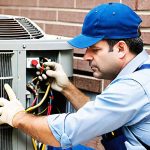
As a leading HVAC installer across Texas and North Carolina, the first question our customers ask Green Leaf Air is, “How much does a new furnace really cost?” After a decade in this industry, I can tell you that national guides (ranging from $2,800 to $7,000) are often misleading. The real cost depends heavily on local labor rates, existing ductwork, and your regional climate.
In this guide, I’ll use our 10+ years of field data to break down the actual furnace replacement costs you can expect, helping you find the most value and make an informed decision.
Furnace Installation Cost Calculator
Key Takeaways
|
Quick Guide: Repair vs. Replace Cost Dilemma (The 50% Rule)
Before diving into replacement costs, the most crucial decision is determining if you need a replacement at all. I use the 50% Rule: If your repair quote exceeds 50% of the cost of a new furnace, replacement is the smarter long-term financial choice.
| Decision | Typical Cost | Pro’s Recommendation |
| Major Furnace Repair | $400 – $1,200 | Recommended if your furnace is less than 10 years old and the repair cost is less than 30% of the replacement cost. |
| Full Furnace Replacement | $2,800 – $7,000+ | Recommended for older units (15+ years) or when facing frequent, costly repairs. |
The Real Factors Affecting the Furnace Replacement Cost
The final price is not just for the furnace unit; it’s a complete, integrated system installation.
Here’s what in-field technicians are looking at when building your quote, and why a quote in Dallas might differ from one in Durham.
1. Type of Furnace & Fuel Source
- Gas Furnaces: Predominant in Texas (Dallas and Houston metroplexes). Cost-effective long-term fuel source.
- Electric Furnaces/Heat Pumps: Common in milder climates and in North Carolina (Raleigh-Durham area). Lower unit cost, but higher running cost (unless paired with a high-efficiency heat pump).
2. Size (BTU) and Professional Load Calculation
A common, costly mistake I fix in the Dallas area is oversizing. Green Leaf Air always insists on a professional Manual J load calculation, a detailed engineering standard that determines the perfect BTU size for your home, preventing inefficient short-cycling.
3. Efficiency Rating (AFUE) – Calculating Your ROI
AFUE measures fuel-to-heat conversion. Higher AFUE means lower utility bills but higher upfront cost.
Pro Tip on ROI:
The primary question is Return on Investment. If you plan to stay in your home for at least 6 to 8 years, the energy savings from a high-efficiency 90%+ AFUE unit will typically pay back the added purchase price. This is the financial sweet spot I recommend for most homeowners in Texas and North Carolina.
4. Furnace Functionality: Staging (The Real Price Driver)
The most significant driver of unit cost is how the furnace operates, which determines comfort and efficiency:
| Type of Function | Description | Impact on Cost & Comfort |
| Single-Stage | Operates only at 100% capacity (on/off). Least expensive, least efficient. | Lowest Cost |
| Two-Stage | Operates at ~70% capacity most of the time, only ramping up to 100% when needed. Better efficiency and heating consistency. | Moderate Cost Increase |
| Modulating | Operates between 40% and 100% capacity in small increments to maintain a perfect, steady temperature. Most expensive, highest efficiency, and best comfort. | Highest Cost |
5. Installation Complexity, Modifications, and Labor
Labor cost (typically $1,500 – $3,000) increases if modifications are needed, such as ductwork repairs, venting changes (for high-efficiency models), or if the unit is located in a restrictive space like an attic or a crawl space.
Average Furnace Replacement Costs (Our 2026 In-Field Data)
Based on our 2024-2026 installation data in the DFW and Raleigh-Durham markets, here is a realistic, all-inclusive (Unit + Labor) cost range for a standard replacement:
| Furnace Type | Realistic Cost (Installed) | Our Expert Notes |
| Electric Furnace | $3,800 – $5,500 | Reliable, often the cheapest install cost. |
| Heat Pump System | $5,000 – $10,000 | Higher initial cost, but it acts as both a heater and an AC. Excellent efficiency in North Carolina climates. |
| Gas Furnace (Standard 80% AFUE) | $4,200 – $6,000 | The common workhorse in Texas (Houston, Dallas). |
| Gas Furnace (High-Efficiency 90%+ AFUE) | $5,500 – $8,500+ | Best ROI if you plan to stay in your home long-term. |
Cost Based on Furnace Size (Unit Only)
This table shows the average unit cost (not including labor) based on home size:
| Home Type | Size | Approx. Unit Cost |
| Small | 1,000-1,500 sq ft | $2,000-$4,000 |
| Medium | 1,500-2,500 sq ft | $3,000-$6,000 |
| Large | 2,500+ sq ft | $4,000-$8,000+ |
Considering a Full HVAC System Replacement? (Furnace and AC Unit)
If your air conditioner (AC) is the same age as your furnace, I strongly urge you to consider replacing both at the same time. This is one of the most significant cost-saving decisions you can make.
Why Bundling Saves You Money and Trouble:
- Labor Savings: Green Leaf Air typically saves customers $1,500 to $3,000 on labor costs alone when bundling, as we only pull one permit and access the system once.
- System Matching: New furnaces and AC units are designed to work together. Installing a new high-efficiency furnace with an old, inefficient AC unit prevents you from maximizing the energy efficiency of either component.
- New System Cost Range (Installed): A complete replacement typically costs between $8,000 and $13,000, significantly less than replacing them separately.
Additional Costs and Cost-Saving Tips
Beyond the furnace unit and core labor, homeowners must factor in mandatory permits, code updates, and optional comfort upgrades. I’ve broken down these key budget additions and provided strategies to ensure you get the best value.
Mandatory Costs & Potential Upgrade Expenses
These are items that may add to your quote but ensure a proper, safe, and modern installation.
Permits & Inspection Fees
- Required by most local municipalities (e.g., Plano, TX) to verify the work meets current building codes.
System Upgrades
- Thermostat: Upgrading to a programmable or Smart Thermostat is necessary for high-efficiency furnaces to maximize energy savings.
- Ductwork Repair: Essential if your existing ducts are leaky or undersized; must be addressed to get value from a new unit.
Optional Comfort Features
- Zoning Systems: Adds complexity and cost if you want to control temperatures in different rooms or zones.
- Air Quality Systems: Integration of new air purifiers, UV lights, or humidifiers can significantly improve indoor air quality.
Cost-Saving Strategies and Rebate Deep Dive
Here are my expert tips to ensure you are getting the best final price:
Time Your Replacement
- Schedule during the “off-season” (spring or fall) when contractor labor demand is lower, often leading to better pricing.
Federal Rebates & Tax Credits
-
- Heat Pumps: May qualify for up to $2,000 in the annual federal Energy Efficient Home Improvement Credit.
- Gas Furnaces: High-efficiency (typically 97% AFUE or higher) gas furnaces may qualify for up to $600 in the same tax credit (Form 5695).
- Note: This credit is available through December 31, 2025. Always check with a tax professional and verify the manufacturer’s certification.
Local Savings
- Look for state and local utility company rebates, which can often be stacked with federal credits.
Maintenance & Quotes
- Prioritize Annual Maintenance: This is the cheapest way to add 5-10 years to your furnace’s life.
- Get Itemized Quotes: Compare at least three quotes that break down the Unit Cost vs. the Labor Cost.
Signs It’s Time to Replace Your Furnace (Safety First)
How do you know if you need a simple repair or a full replacement?
- Safety Hazard (Cracked Heat Exchanger): This is the most serious red flag. A cracked heat exchanger can allow exhaust fumes to mix with breathable air, leading to deadly carbon monoxide poisoning. If this is confirmed, replacement is mandatory for your safety.
- The Age Factor: It’s Over 15 Years Old.
- The 50% Rule: The repair cost exceeds 50% of the replacement cost.
- High Energy Bills: A sudden, unexplained spike in your gas or electric bill.
Common Furnace Parts That Fail First (And Their Repair Costs)
The final decision to repair or replace often comes down to the cost of a single broken component. If your furnace is over 10 years old and needs one of these major repairs, applying the 50% Rule is essential.
| Failed Component | Typical Installed Repair Cost | Why It Fails |
| Blower Motor | $600 – $1,500 | Lack of lubrication; excessive friction. |
| Control Board | $500 – $1,100 | Electrical spikes or moisture damage. |
| Ignitor/Flame Sensor | $200 – $450 | Normal wear and tear; sensor corrosion. |
| Gas Valve | $400 – $750 | Internal electrical component failure. |
Does Homeowners Insurance Cover Furnace Replacement?
Generally, no, homeowners’ insurance does not cover furnace replacement due to standard wear and tear, age, or lack of maintenance. Insurance typically only covers damage that is “sudden and accidental,” such as:
- Fire damage originating outside the unit.
- A sudden electrical surge caused by an external event (like lightning).
- Vandalism or wind/storm damage.
Replacement due to age, rust, or a simple component failure is the homeowner’s responsibility.
Conclusion
While this guide provides the most realistic cost estimate based on real-world data in Texas and North Carolina, the only way to get an exact, non-inflated price is to have a professional inspect your home’s unique layout, ductwork, and electrical systems.
For homeowners within our Dallas-Fort Worth, Houston, or Raleigh-Durham service areas, Green Leaf Air offers professional consultation. We will provide a fully transparent, fixed-price quote with no hidden fees and discuss the most affordable options for your furnace replacement service.
Don’t settle for inconsistent heating or risk your safety. Contact us today to schedule your appointment and get a reliable, high-efficiency furnace installed correctly the first time.
FAQs
How Long Does a Furnace Replacement Installation Actually Take?
A standard furnace replacement takes our certified technicians 4 to 8 hours from start to finish. More complex installations requiring modifications can take a full day.
What Is the Expected Lifespan of a New Furnace?
The average lifespan of a new furnace is 15 to 20 years. Longevity is best achieved through proper sizing and yearly professional maintenance.
Does Installing a High-Efficiency Furnace Require New Venting?
Yes, it does. High-efficiency 90%+ AFUE furnaces require durable PVC pipe venting, which is a mandatory, code-compliant step that affects installation labor.
Should I Replace My Furnace and AC at the Same Time?
Yes, we highly recommend bundling them. Replacing both units ensures optimal system matching for efficiency and saves the homeowner $1,500 to $3,000 in total labor costs.
How Often Should I Schedule Professional Furnace Maintenance?
You should schedule professional service once per year, ideally in the early fall, to ensure the unit is running safely and efficiently before the main heating season.
How Do Your Prices Compare to National Retailers like Home Depot?
Local experts like Green Leaf Air generally offer more competitive and transparent pricing than national retailers, who often use third-party installers with higher overhead. We encourage obtaining three itemized local quotes, including ours.
Does This Guide Apply to Oil Furnaces or Propane Furnaces?
The core cost factors (labor, efficiency, staging) apply to all fuels. Oil and Propane furnaces typically have a higher installed price, often ranging from $5,000 to $10,000+ due to specialized venting and tank requirements.