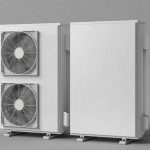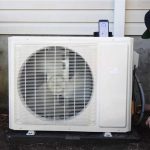
3 ton vs 4 ton AC is one of the common sizing decisions for mid-size homes. It feels like just one extra ton. But in the HVAC world, this is an extra jump of 12,000 BTU per hour of cooling capacity and 400 extra CFM of airflow.
During our service calls, we see people want to go for a more “powerful” unit. However, it’s more about matching the house, ductwork, climate, and humidity load.
| TL;DR A 4-ton AC offers 33% more cooling power than a 3-ton unit, but it requires a larger house (typically over 2,200 sq. ft.) and much wider ductwork to handle a massive 400 CFM jump in airflow. |
What Are Tonnage, BTU, and Airflow (CFM)?
In HVAC terms, tonnage is the ability of your air conditioner to extract heat. One ton of AC unit can extract 12,000 BTU of heat per hour. CFM stands for cubic feet per minute, and it’s used to measure how much air flows per unit of time.
Homeowners typically run these numbers when an existing unit begins to struggle, and they are at the tipping point of a repair or replace decision. Here’s how it works:
If you jump to a 4-ton from a 3-ton, the cooling capacity increases by 33% (3 ton = 36,000 BTU/h and 4 ton = 48,000 BTU/h). However, it’s only half the equation.
A 4-ton unit moves 1,600 CFM of air. Meanwhile, a 3-ton unit pushes 1,200 CFM of air. For every ton increase, there is this 400 CFM jump. Your home has to be big enough to handle the huge airflow from the extra 400 CFM.
Do You Need a 3-Ton or 4-Ton Unit for Your Home?
A 1,800-2,200 sq ft home needs a 3-ton AC, while a 4-ton unit is suitable for a 2,200-2,800 sq ft home. As a general baseline, HVAC professionals use standard square footage brackets to establish a starting point for residential systems.
However, regional climate, sun exposure, and insulation can heavily shift the load. For example, before an AC installation in Dallas, your load calculations can show you might need a 4-ton unit for a 2,100 sq ft space.
Ductwork Difference for 400 CFM Airflow
With more cooling power, a 4-ton system needs much larger ducts to pass the airflow.
As I’ve said before, a 3-ton unit pushes 1,200 CFM air. A 1,200 CFM duct line is 20 inches wide by 10 inches deep (200 square feet). For 1,600 CFM, the duct has to be 24 inches wide by 10 inches deep (288 sq ft) or 28 inches wide by 10 inches deep (280 sq ft).
Most homes built originally for 3-ton systems often have ductwork made for 1,200 CFM airflow. If your home loses insulation capabilities over time, you can’t simply put a 4-ton system with a 3-ton’s ductwork.
What Happens When You Set Up a 4-Ton System with an Undersized 3-Ton Ductwork?
The high static pressure from a 4-ton air conditioner condenser jams the 3-ton ductwork. You can notice several problems immediately:
- Louder Vents: Your supply registers and return grills feel like whistling or rushing wind tunnels.
- Reduced Efficiency: The blower motor has to work harder to push the air through more resistance.
- Frozen Coils: Because not much warm air passes over the evaporator coil, the refrigerant temperature drops.
- Premature Failure: High static pressure strains the compressor and burns out the blower motors.
Upgrading your equipment without upgrading a restrictive duct layout is a recipe for high costs and low comfort.
The Borderline Zone of 2,100 to 2,300 Sq Ft
On generic charts, a 3-ton unit works for a maximum of 2,000 sq ft. A 4-ton system’s recommendation starts from 2,400 sq ft. But what happens when your home is in the confusing spot of 2,100 to 2,300 sq ft?

In most cases, your home’s insulation and your regional climate will push you towards a 3 ton or a 4. However, there are other choices.
The 3.5-Ton Sweet Spot
3-ton and 4-ton are not binary choices for mid-sized homes. 3.5-ton systems offer a middle ground, with 42,000 BTUs and 1,400 CFM. If a 3-ton becomes too weak for peak summer and a 4-ton can completely overwhelm your ductwork, 3.5-ton is the perfect balance of capacity and infrastructure compatibility.
Historic Homes vs Modern Construction
Older homes need larger units because of poor insulation, while modern homes can get away with slightly smaller units with good insulation.
Consider your home as a thermal envelope. If your home was built before 1990, chances are that your building is drafty or weatherstripping has worn out. The HVAC tonnage per square foot shifts to 400 to 500 sq ft/ton. In other words, your 2,200-square-foot home needs a 4-ton unit.
If your home was built in the last 10-15 years, it should have better construction and high R-value insulation. In that case, a 2,200 sq ft home can easily use a 3.5-ton unit.
How a Bigger Unit Can Damage Your Home
We often see some people want to buy a larger system because they have a room to spare. However, bigger isn’t always better. Your unit size depends on the area of your home. If you install a bigger unit (like a 3-ton instead of a 2-ton), you will notice:
Short Cycling
If you install a 4-ton AC when you need a 3-ton, your room will cool fast initially. Since it will cool faster, not every area will be cooled the same. Your thermostat will notice cold air surrounding it, and signal your AC to turn off.
The loop repeats fast and is called short-cycling. Every time, your AC draws a huge amount of power. Since it is turning on and off constantly, you end up with a much higher bill than you should.
High-Humidity and Clammy Rooms
Constant on-and-off also means shorter runtime. When your HVAC system runs for a shorter period, it doesn’t have enough time to remove all the moisture. As a result, some spots in your room stay hot, and you feel humid inside.
Cost Difference Between 3-Ton and 4-Ton
The cost to install a unit depends on your dealer, efficiency rating, and brand.

Equipment Pricing
In 2026, the cost difference between a 3-ton and a 4-ton AC ranges from $800-$1,500. A Trane’s cost gap could be higher than a Goodman’s, because Goodman’s unit prices are more in the affordable range. At Green Leaf Air, we offer the same sticker price regardless of the size of the HVAC system.
However, a 4-ton unit can come with additional modifications (like extra ductwork space we’ve discussed). The extra material and labor cost add to the AC installation cost and make a 4-ton unit relatively higher-priced than a 3-ton unit.
Electricity/Fuel Costs
A 4-ton unit simply costs more because of the bigger size and volume of output. With the standard 14.3 SEER2, a 3-ton unit draws 3,000-3,500 watts per hour. A 4-ton unit draws 4,000-4,500 watts per hour. If you run it for 8 hours daily at $0.16 per kWh, it’s $30-$40 more for a 4-ton system.
Sizing is one of the questions first-time HVAC buyers ask, and rightfully so. However, keep in mind that the SEER2 rating has more effect on your bills than the size or capacity of your unit. And if you get an oversized or undersized one, these calculations go out the window.
Compressor Technology Can Change Your Tonnage Rule
A bigger unit can be less forgiving with two-stage or variable-speed features.
All the calculations and charts are applicable for single-stage systems. A single-stage system is where your unit operates fully on or fully off. When a 4-ton system runs as a single stage in a 2,200 sq ft space, it has the possibility to short cycle more.
Two-Stage Systems: Two-stage systems, like the Trane 3 Ton 16 SEER2, have a compressor that can run at a low stage (65-70% of full capacity) and full (100% capacity). You can get long runtime at lower output for smaller spaces that can remove the downsides of short cycling.
Variable-Speed Systems: Variable-speed compressors have even more freedom with the output. Depending on the amount of cooling you need, a variable-speed system can go as low as 25% of its maximum output with a 1% increment.
Which One is the Right Choice for You, 3-Ton or 4-Ton?
If you are stuck trying to decide between these two capacities, use this checklist to see which direction your home’s infrastructure fits.

Choose a 3-Ton System When:
- Your home’s total living space is under 2,200 sq ft.
- Your existing ductwork is built tightly around a 20″ x 10″ (1,200 CFM) limit.
- You live in a moderate climate zone with mild summers.
- Your home is newer (built in the last 10–15 years) with excellent insulation.
- Excellent indoor humidity control is your top priority.
Choose a 4-Ton System When:
- Your home’s total living space is well over 2,300 sq ft.
- Your ductwork is verified to handle at least 24″ x 10″ or 28″ x 10″ (1,600 CFM).
- You live in a punishingly hot or highly humid regional climate.
- Your home features high vaulted ceilings and massive west-facing window exposure.
- Your current ductwork can handle the higher airflow volume without whistling or choking.
Always Get an Accurate Sizing with Manual J Calculations
Sizing goes beyond just your square footage and regional climate. Manual J load calculations are the best way to get as accurate a sizing for residential spaces as possible.
Going with your old unit’s size isn’t always a good idea either. Before getting an AC replacement, ask your contractor for a size calculation. A Manual J calculation factors in:
- The exact orientation and sun exposure of your roof and walls
- Local climate design temperatures and regional humidity trends
- The total square footage and height of your ceilings
- The R-value of your wall and attic insulation
- The total surface area and efficiency rating of your windows and doors
- The layout, trunk-line diameter, and static pressure limits of your current ductwork
Any HVAC contractor in Dallas will be more than happy to show you the reports and answer your load queries.
Conclusion
Balance beats power. When choosing between a 3-ton and a 4-ton AC, the right answer is never about buying the most powerful equipment. True comfort comes down to precise balance.
Choosing a smaller 3-ton system when your home needs a 4-ton load will leave your system running non-stop on July afternoons. On the other hand, forcing a 4-ton system into a home that has 3-ton ductwork will make the unit short-cycle and the indoor air clammy.
Don’t guess on tonnage or rely on just basic square footage estimates. Let the professionals guide you to a better investment so you get a system that runs efficiently.