Inconvenience is an understatement for dry indoor air. It can cause dry skin, sinus issues, poor sleep quality, and even static shocks. Green Leaf Air has been helping Texas homeowners solve these problems for years, and I’ve seen firsthand how the right home air humidifier makes a difference.
But people sure want to do their research. With so many options available in the market, picking one feels like a gamble. I am sharing this air humidifier guide to walk you through how to pick the best system for your space, maintain it properly, and get the most out of your investment.
| TL;DR A humidifier adds humidity to dry air; choose the right one, use distilled water, maintain and clean it regularly, and store it properly when unused to get the most out of your humidifier. |
Why Your Home Needs Humidifiers
A humidifier’s main job is to add moisture to your indoor air. Besides increasing humidity, it helps reduce health issues, prevent property damage, lower energy bills, and improve overall comfort. Here’s how it makes a noticeable difference:

Relieve Physical Discomfort
That scratchy throat you wake up with every winter morning? Your body is telling you the air is pulling moisture from your respiratory system. It happens because your room’s humidity is too low. To make up for the room’s lack of humidity, your nasal passages, throat, and skin dry out, especially during the heating season.
Adding a home air humidifier helps you soothe these symptoms. I’ve seen clients go from constantly applying lotion and lip balm to completely forgetting they ever had dry skin simply by maintaining proper humidity indoors.
Ease Health Issues
Research continues to show the link between humidified air and better respiratory health. Studies have found that keeping relative humidity between 40 and 50% can significantly reduce the spread of airborne viruses like the flu and COVID-19. In a healthy moisture level, your immune system simply has a better environment.
A proper range of humidity in the room also keeps your nasal passages moist. You don’t get flare-ups as often. If you are struggling with allergies and dust mites, this is especially helpful. For families managing health conditions like asthma, it’s a major difference.
Improve Sleep Quality
Most sleep advice talks about blackout curtains and room temperature, but they forget the correlation between sleep quality and moisture. Breathing dry air all night leads to snoring and congestion. You wake up with a sore throat or dry mouth, as we’ve already mentioned.
A humidifier makes the air more breathable and soothes your respiratory tract. You can choose a cool mist model or a warm mist option. The improvement will still be the same: easier breathing, better rest, and fewer overnight interruptions.
Protect Belongings and Furniture
Beyond your health, dry air silently also damages your home. The wood in your home contracts and cracks in low humidity. Musical instruments lose their tone, and even paper or photographs start to warp. If you can maintain the humidity, you can protect your furniture, floors, and family heirlooms.
How Do You Know If You Need a Humidifier?
Modern HVAC systems often have a built-in humidification option. For some climates, they are enough. Humidifiers in a central air conditioning system deliver moisture far more consistently. In northern or desert areas, you need an additional humidifier. Areas like Dallas and the Deep South have short but harsh, dry winters.
If you see the following symptoms, contact your IAQ specialist for an assessment:
- Static electricity shocks when you touch doorknobs.
- You waking up with dry nasal passages, a sore throat, or bloody noses.
- Wooden furniture is cracking, or the hardwood floor planks are shrinking.
- Hygrometer readings consistently stay below 30% relative humidity.
What Are the Different Types of Humidifiers?
But how do you choose the right humidifier for you? Let me break down the most common types of humidifiers, their pros, cons, and best use cases.

Cool Mist Humidifiers
Cool mist humidifiers release room-temperature water vapor into the air. That’s why they are ideal for warmer climates, homes with children, or year-round use. Many families use them as part of their seasonal allergy strategy.
Ultrasonic Humidifiers
Ultrasonic models use high-frequency vibrations to produce a fine mist. They’re nearly silent, which is perfect for bedrooms. However, using tap water in these humidifiers may cause dust from the water’s mineral deposits. You should use distilled water to avoid the dust with ultrasonic humidifiers.
- Best for: Bedrooms, nurseries, light sleepers
- Watch out for: Mineral dust if not using filtered water
Evaporative Humidifiers
Evaporative humidifiers use a moistened filter and fan to naturally add moisture to your air. They’re more forgiving with tap water and ideal in homes with hard water. They also self-regulate based on the humidity already present in the air.
- Best for: Living rooms, open areas, families
Warm Mist Humidifiers
Warm mist or steam vaporizers use a heating element to boil water and release warm mist. The heating process kills bacteria. It’s a hygienic option if you have respiratory sensitivities. Although they are perfect for winter, they use more electricity and can be risky around small children because of hot water.
- Best for: Adults, flu season, dry climates
Dual Mist Humidifiers
Dual mist humidifiers give you the best of both worlds: cool mist in summer, warm mist in winter. Yes, you sometimes need humidifiers in the summer as well. Constantly running air conditioners strip away the moisture from the air, and balancing humidification in air conditioning systems keeps you comfortable.
However, dual mist humidifiers are more expensive and require more maintenance, but if you want one unit to handle your entire year, this is it.
- Best for: Year-round comfort, versatility
Humidifier Feature Summary
| Features | Ultrasonic (Cool Mist) | Evaporative (Cool Mist) | Warm Mist | Dual Mist |
| Best for | Bedrooms, nurseries | Living rooms, whole-home use | Cold seasons, sinus relief | Year-round use, flexibility |
| Noise Level | Very quiet | Moderate | Quiet | Varies |
| Maintenance Needs | Medium (needs distilled water) | Low (replace filter) | Medium-High | Medium |
| Safety Note | May leave white dust | Fan may be noisy | Gets hot; keep away from kids | Pricier, more features to clean |
| Bacteria Control | Manual cleaning | Filter helps | Boiling kills germs | Varies by mode |
Recommended Humidifier Types by Room & Need
| Best Use Case | Best Humidifier Type | Ideal Features to Look for | Top Recommendation |
| Bedrooms & Nurseries | Ultrasonic (Cool Mist) | Whisper-quiet operation (< 30 dB), auto shut-off, night light toggle | 1–1.5 Gallon tank capacity |
| Hard Water Areas | Evaporative | Antimicrobial wick filter, top-fill tank | Self-regulating evaporative design |
| Large / Open-Plan Rooms | High-Capacity Evaporative or Console | High output (gallons/day), digital humidistat | Covers 500+ sq ft |
| Winter Sick Days | Warm Mist / Vaporizer | Essential oil cup option, medicine cup | Boiling-action germ reduction |
What to Consider When Picking a Humidifier for Your Home
This section of the air humidifier guide is designed to help you make a well-informed decision for your specific needs. Among the main benefits of central air humidifiers are hands-off operation, direct plumbing integration, and eliminating the need to manually refill water tanks daily.

Room Size and Coverage Area
Humidifiers come with specific ratings for square footage. You need to match the unit’s capacity accordingly for effective air humidification.
- If you have high ceilings (above 9 feet), open floor plans, or connecting rooms, increase the recommended square footage by about 25% to compensate for more volume and air circulation.
- A small bedroom typically requires a smaller portable unit, while a large living room or open-concept space may need a more powerful evaporative or ultrasonic humidifier with higher moisture output.
- For whole-house humidifiers integrated with your HVAC system, make sure the unit supports continuous humidification across multiple rooms for consistent comfort and humidity control.
To summarize, the humidifier requirements for room sizes look like this:
- Small Rooms (Up to 250 sq ft): 1-gallon portable unit.
- Medium Rooms (250–500 sq ft): 1.5–2-gallon unit.
- Large / Open-Plan Spaces (500+ sq ft): 3+ gallon evaporative console or a whole-home HVAC humidifier integration.
Water Quality Compatibility
The type of water you use affects the performance and maintenance of your humidifier, as well as the quality of the humidifier air it produces.
-
- Hard water: Contains minerals that cause white dust buildup in ultrasonic humidifiers and other cool mist humidifiers. If you have hard water, consider evaporative humidifiers with replacement wicks or moistened filters, which trap minerals and prevent dust.
- Well water: May have bacteria or impurities that can affect indoor air. Warm mist models or steam vaporizers are excellent choices here since the heating element boils the water and kills germs.
- City water: Often contains chlorine, which can cause an unpleasant smell or taste in mist. To avoid this, let tap water sit overnight so chlorine can evaporate before use.
- Water Quality for Baby: Always use distilled or demineralized water in a nursery humidifier. The aerosolized white dust from water minerals can irritate an infant’s developing lungs. Stick to cool-mist models to prevent accidental burn hazards.
Using distilled water is always the best option to prevent mineral deposits and keep your humidifier clean. If that’s not possible, be sure to choose a model compatible with your local water type.
Noise Levels
Noise tolerance is important. Some humidifiers have sounds that you wouldn’t want in your bedrooms or quiet spaces. Consider noise levels carefully if you’re sensitive to sounds or using the humidifier alongside a cooling system or air conditioner.
- Ultrasonic humidifiers have whisper-quiet operation. They are ideal for nurseries, bedrooms, and offices where minimal noise is a priority.
- Evaporative humidifiers have a built-in fan. It generates a gentle humming sound. Some people find this white noise soothing and helpful for sleep, while others may find it distracting.
- Warm mist models tend to be quieter but sometimes emit a faint boiling sound.
Maintenance and Cleaning
A clean and well-maintained air humidifier gives you all the benefits to keep your indoor environment healthy. Evaporative systems rely on a porous pad to pull moisture into circulating air, trapping mineral deposits in the process. Over time, mineral buildup reduces airflow and output efficiency, making timely humidifier water panel replacement essential every season for clean, consistent moisture delivery.
- Choose models with top-fill water tanks and dishwasher-safe components to simplify cleaning.
- Some units include UV lights or antimicrobial coatings to reduce bacteria and mold growth.
- Use proper cleaning solutions like 3% hydrogen peroxide to disinfect your humidifier regularly and prevent mineral buildup or mold, especially in ultrasonic models.
- Replace filters or wicks according to manufacturer recommendations, especially in evaporative humidifiers, to maintain optimal output.
- Consistent cleaning prevents unpleasant symptoms linked to dirty humidifiers, such as respiratory irritation and worsened allergy symptoms.
Smart Features and Automation
Modern humidifiers often come with smart features that improve convenience and safety.
- Built-in humidistats automatically monitor and adjust moisture levels.
- Auto shut-off features prevent the unit from running dry. You reduce the risk of overheating or damage.
- Some units offer app connectivity for remote control, scheduling, and real-time humidity monitoring.
- Avoid gimmicks like color-changing lights or unnecessary aromatherapy features unless they genuinely enhance your experience and suit your preferences.
Tips to Keep Your Humidifier Clean and Germ-Free
Maintaining your home air humidifier is essential to add proper moisture indoors. On the other hand, a poorly maintained one can introduce harmful mold, bacteria, or mineral deposits. If you neglect the cleaning, you may also get unpleasant symptoms like respiratory irritation.
Here’s how to keep your unit safe and effective:
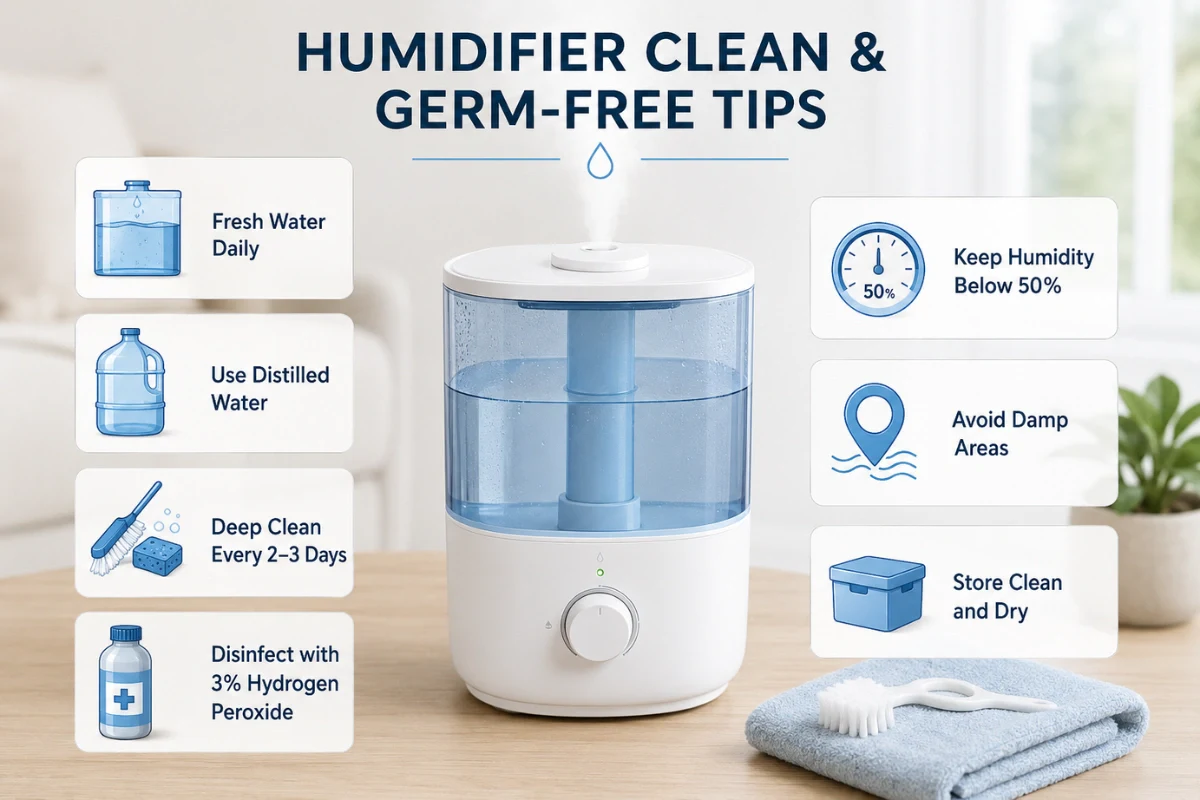
Refill the Water Tank Daily with Fresh Water
Refilling the water tank daily with fresh water is one of the simplest yet most important habits for maintaining your humidifier. Stagnant water becomes a breeding ground for bacteria, mold, and other harmful microorganisms that can negatively affect indoor air quality. Pairing humidifiers with in-duct air purification (such as the RGF REME HALO whole home air purifier) neutralizes airborne contaminants, bacteria, and allergens throughout the ductwork.
Empty the tank and refill it every day. These make sure the humidifier air you breathe stays clean and free of contaminants to keep you safe from respiratory irritation or allergic reactions.
Use Distilled Water Whenever Possible
Use distilled water in your humidifier to reduce the buildup of mineral deposits and white dust. If you have an ultrasonic or cool mist humidifier, you often need to use distilled water. Tap water has minerals that the humidifier can disperse into the air as water vapor. You don’t want it to settle on furniture and floors. Distilled water also keeps your humidifier running smoothly and prolongs the life of its components.
Deep Clean Your Humidifier Every 2–3 Days
Clean your humidifier every 2 to 3 days to prevent biofilm, scale, and bacteria from accumulating inside. You can use mild soap and warm water to clean all removable parts (like the water tank, base, and any filters or wicks). Evaporative humidifiers need regular filter cleaning or replacements.
Consistent cleaning not only preserves the unit’s efficiency but also ensures the humidifier air remains healthy and free of pathogens.
Disinfect Safely Using a 3% Hydrogen Peroxide Solution
3% hydrogen peroxide is safe and effective to kill bacteria, mold, and other germs. You can use it instead of harsh chemicals to disinfect your humidifier. Follow the manufacturer’s instructions for applying the solution to all surfaces that contact water, including the water tank and base.
After disinfecting and before reassembling the parts, rinse all parts thoroughly with fresh water. If you use your humidifier frequently or your environment is prone to microbial growth, regular disinfection is the key.
Keep Indoor Humidity Levels Below 50%
While humidifiers add much-needed moisture to dry air, you need to maintain humidity levels below 50%. It’ll avoid fostering mold growth and dust mites. You can also avoid humidity-related allergens and unpleasant symptoms like sneezing or congestion.
Use a hygrometer or select a humidifier with built-in humidistat control to maintain the ideal relative humidity between 30% and 50%. While portable units handle localized dry air, unaddressed HVAC humidity problems can cause long-term damage to hardwood floors, trim, and wooden furniture across the entire house.
Avoid Placing Your Humidifier Near Damp or Musty Areas
Damp, musty, or poorly ventilated areas can cause unnecessary moisture around the unit. The excess moisture can encourage mold growth inside and around the humidifier surfaces. Position your humidifier away from these areas.
To prevent mold, dust, or mineral buildup from circulating alongside humidified air, pair your system care with regular air duct cleaning and routine AC maintenance. Keeping ductwork clean ensures that added humidity improves your health without spreading trapped dust or allergens.
Store Your Humidifier Clean and Dry When Not in Use
Home humidifiers are mostly seasonal appliances. Half of the year, you probably will turn it off (or place it in a summer storage mode). Before storing, follow this checklist to avoid mold and bacteria buildup during downtime:
- Empty the water tank
- Thoroughly dry all parts
- Clean or replace filters and wicks
Storing your humidifier clean and dry also protects the internal components. When you use it next time, you will get more consistent performance.
Closure: Bring Home a Humidifier and Breathe Better
A well-maintained humidifier is an invaluable tool for improving your home’s indoor air quality, boosting sleep quality, and protecting your home’s structure from the effects of dry air. Whether you’re considering portable humidifiers for single rooms or whole house humidifiers for consistent moisture throughout your home, the right unit can make a significant difference in comfort and health.
If you’re unsure which humidifier best fits your environment or want expert advice on how to use an air humidifier effectively, is ready to help Texas homeowners find the best air humidifier solutions tailored to their needs.
FAQs
Can I Use Essential Oils in My Humidifier?
Only use oils if the model is compatible. Most ultrasonic humidifiers and cool mist humidifiers aren’t safe with oils. Use steam vaporizers or specialized units instead.
Is It Safe to Run a Humidifier With My AC?
Yes, as long as indoor humidity remains between 40–50%. Some whole-house humidifiers will auto-adjust alongside your air conditioning system.
Why Is There White Dust Around My Ultrasonic Humidifier?
That’s from mineral deposits in tap water. Use distilled water or switch to evaporative humidifiers to prevent it.
How Often Should I Clean My Humidifier?
Clean your air humidifier regularly: water tank daily, deep clean every 2–3 days with hydrogen peroxide to avoid mold and bacteria.
What Humidifier Works Best for the Entire House?
Use whole-house humidifiers with your HVAC for consistent air humidification. If not possible, high‑capacity evaporative or ultrasonic models with strong moisture output are good alternatives.
What humidifier features matter most for easy maintenance?
Humidifiers with a wide, top-fill water tank are the easiest to maintain. They have hand access for scrubbing. You can look for other features like dishwasher-safe components, an auto-shutoff mechanism when empty, and removable/washable filters.
What is the difference between an air purifier and a humidifier?
A humidifier adds water moisture to dry indoor air to solve skin and sinus discomfort. An air purifier removes airborne contaminants like dust, pollen, and pet dander. They do not perform the same job, but using both together provides optimal indoor air quality.